Drugs offences Defence Barrister
Defend complex drug conspiracies with authority. Charlie commands courtrooms in high-stakes supply, importation, and trafficking cases. Proven expertise dismantling covert surveillance evidence and challenging prosecution theories in multi-defendant trials.
Contact CharlieSerious Drugs Offences – Strategic Defence for High-Stakes Cases
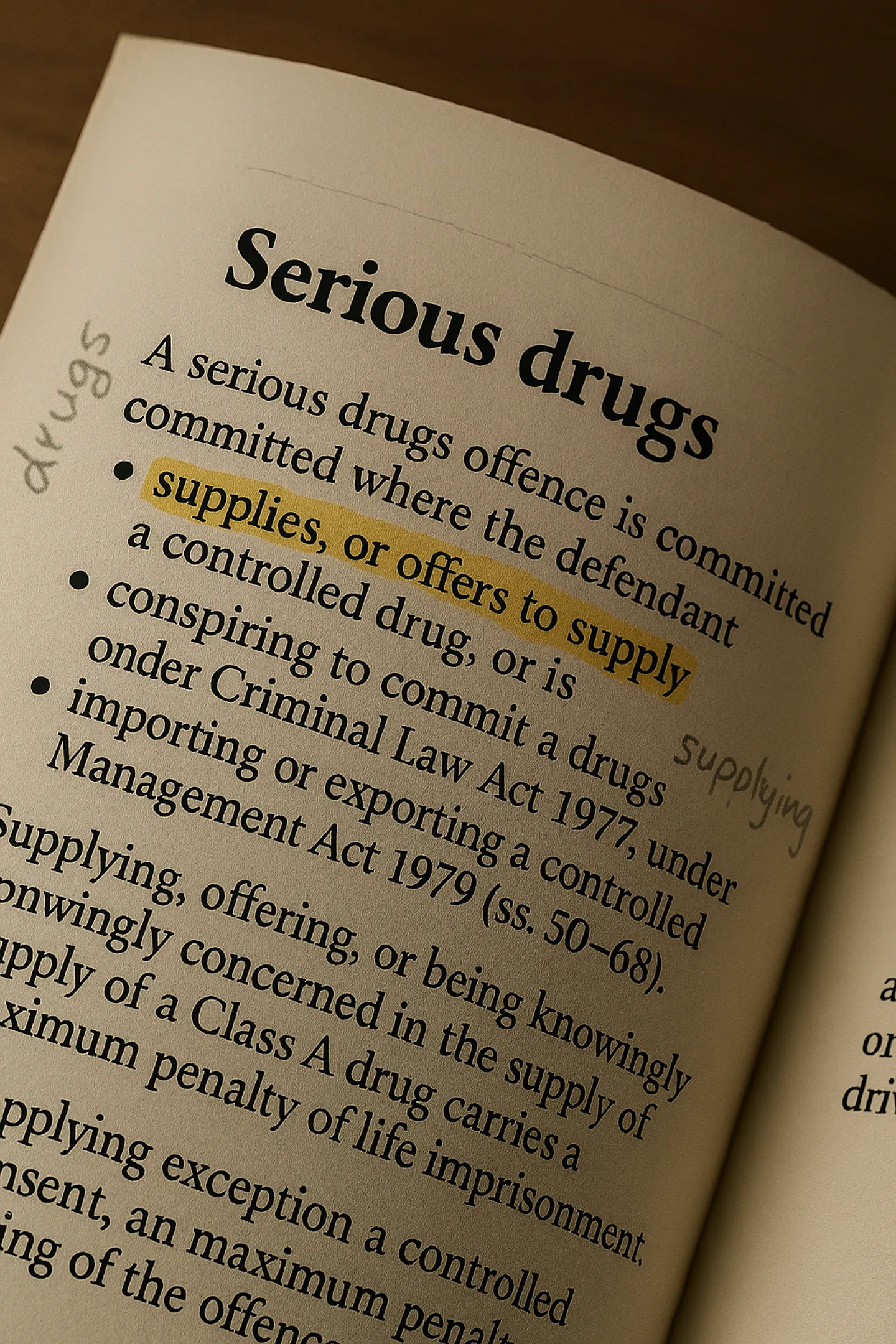
Drug trafficking and supply allegations carry severe custodial sentences and devastating consequences for careers and families. Whether facing county lines conspiracies, large-scale importation, or organized crime charges, you need a KC with proven authority dismantling complex prosecution cases. Charlie Sherrard KC has defended serious drug offences for decades, securing acquittals in multi-defendant trials involving millions of pounds worth of Class A drugs.
Why Instruct Charlie Sherrard KC for Drugs Offences?
Mastery of complex conspiracy cases
Charlie excels in multi-handed drug supply conspiracies involving numerous defendants, encrypted communications, and sophisticated criminal organizations. He understands how to challenge joint enterprise, prove innocent association, and demonstrate lack of knowledge or participation.
Expert at dismantling surveillance evidence
Modern drug prosecutions rely heavily on covert surveillance, phone evidence, and encrypted messaging. Charlie has extensive experience challenging the admissibility and interpretation of surveillance evidence, exposing gaps in the Crown’s case, and presenting alternative innocent explanations.
Proven success in importation trials
From commercial importations through ports and airports to personal importations, Charlie understands customs law, search powers, and knowledge requirements. He challenges identification of substances, disputes quantities, and exposes weaknesses in chain of custody evidence.
Strategic approach to guilty pleas
Where the evidence is overwhelming, Charlie provides candid advice on pleading guilty to reduced roles or lesser charges, then secures the shortest possible sentence through powerful mitigation addressing addiction, exploitation, and realistic prospects of rehabilitation.
Areas of Expertise
- Conspiracy to supply Class A drugs – cocaine, heroin, crack, MDMA organized distribution networks
- Commercial importation – container loads, concealed shipments, postal importations
- County lines operations – exploitation of vulnerable runners, cross-border supply chains
- Cannabis cultivation – industrial grows, electricity abstraction, modern slavery defences
- Encrypted communications – EncroChat, Sky ECC, challenging decryption evidence
- Covert surveillance – phone evidence, tracking devices, undercover officers
- Money laundering – proceeds of crime allegations linked to drug trafficking
- Drug driving offences – defending cannabis and cocaine driving charges
Recognition and Results
Band 1 Crime Silk – Chambers UK Bar Guide (13 consecutive years)
Leading Silk in Serious Crime – Legal 500
Charlie’s reputation in serious drugs cases stems from securing acquittals in conspiracies where co-defendants were convicted, reducing sentences through compelling mitigation, and successfully appealing drug convictions based on legal errors.