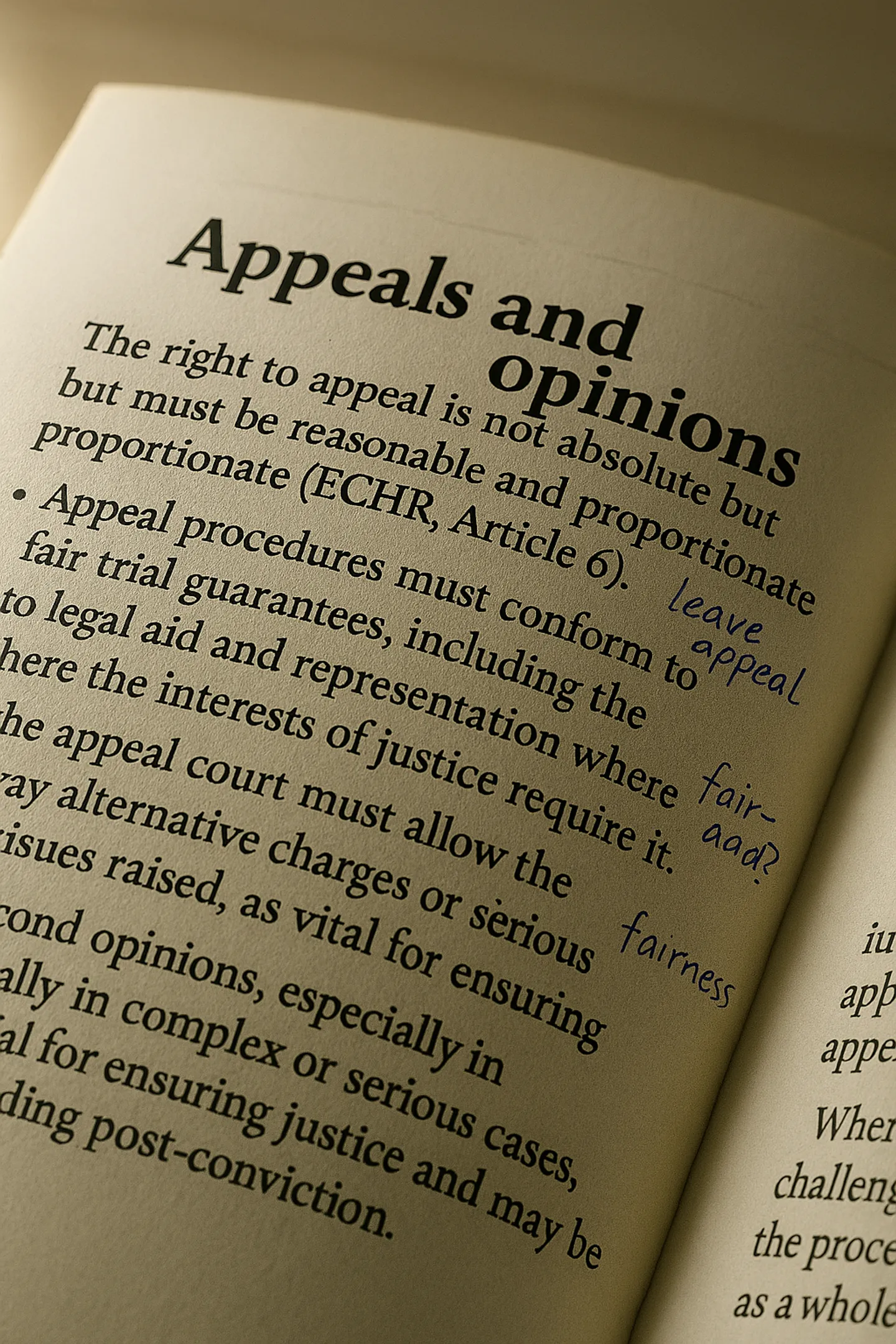
Appeals and Second Opinion Barrister
Challenge convictions and sentences with precision. Charlie delivers incisive appeal grounds, rigorous case reviews, and decisive second opinions. Expert in conviction appeals, sentence challenges, and CCRC referrals across all serious criminal matters.
Contact CharlieCharlie Sherrard KC — Leading Criminal Appeals & Second Opinions
Charlie Sherrard KC is trusted for criminal appeals and independent second opinions that cut to the heart of a case. What you get: forensic analysis, realistic prospects, and focused advocacy designed to achieve the right outcome.
Why Instruct Charlie Sherrard KC for Appeals?
Forensic Case Analysis
Charlie conducts meticulous reviews of trial transcripts, summing up, jury directions, and evidential rulings to identify errors of law, material irregularities, and unsafe verdicts. His analytical approach uncovers appealable grounds that others overlook, from flawed expert evidence to improper admission of bad character material.
Fresh Evidence Strategy
Where new evidence emerges post-conviction, Charlie assesses admissibility under section 23 of the Criminal Appeal Act 1968 and the Lamaletie criteria. He develops strategic approaches to fresh evidence applications, including expert re-examination, forensic advances, and previously unavailable witness testimony that undermines conviction safety.
CCRC Referral Expertise
Charlie advises on Criminal Cases Review Commission applications where appeal routes are exhausted. His experience spans the threshold for referral, disclosure strategies, and building comprehensive submissions that satisfy the real possibility test for overturning convictions on safety grounds.
Sentence Appeals
Manifestly excessive sentences, sentencing errors, and guideline misapplication are identified through rigorous analysis of sentencing remarks and pre-sentence materials. Charlie secures sentence reductions by highlighting disproportionality, mitigation overlooked at first instance, and incorrect application of totality principles.
Grounds of Appeal Drafting
Charlie’s grounds are incisive, legally robust, and focused on arguable points that meet the single judge and full court test. Each ground is supported by transcript citations, case law authority, and clear articulation of how the error renders the conviction unsafe or sentence wrong in principle.
Notable Appeal Successes
Charlie has achieved convictions overturned in the Court of Appeal across sexual offences, serious violence, and fraud matters where trial errors rendered verdicts unsafe. His work includes:
- Overturned convictions following successful appeals on jury direction failures, admissibility challenges, and fresh psychiatric evidence.
- Successful sentence reductions achieving custody threshold reconsideration, immediate release, and suspended sentence substitution.
- CCRC referrals leading to acquittals where post-conviction investigation revealed disclosure failures, expert evidence flaws, and witness credibility issues not explored at trial.
Areas of Expertise
Conviction Appeals to Court of Appeal
Challenging unsafe verdicts through identification of errors in summing up, improper admission or exclusion of evidence, jury irregularities, inadequate disclosure, and fresh evidence undermining prosecution case integrity.
Sentence Appeals
Addressing manifestly excessive sentences, wrong in principle rulings, failure to credit mitigation, incorrect dangerous offender findings, and disproportionate consecutive terms across sentencing guideline categories.
CCRC Applications (Criminal Cases Review Commission)
Preparing comprehensive applications post-appeal, developing fresh lines of enquiry, obtaining expert reports, and building submissions meeting the real possibility threshold for conviction or sentence referral.
Fresh Evidence Applications
Securing leave to adduce evidence unavailable at trial under section 23 Criminal Appeal Act criteria: capability of belief, admissibility, reasonable explanation for non-production, and affording reasonable explanation for conviction.
Second Opinion Case Reviews
Independent assessment of trial conduct, previous advice, appeal prospects, and strategic options providing realistic evaluation of strengths, weaknesses, and recommended next steps across conviction and sentence challenges.
Abuse of Process Arguments
Identifying prosecution misconduct, disclosure breaches, delay prejudice, and due process violations warranting appeal intervention where fundamental unfairness undermines trial integrity and conviction safety.
Jury Direction Errors
Challenging inadequate or misleading directions on law, burden and standard of proof, good character, lies, corroboration, joint enterprise, and special measures affecting verdict safety.
Admissibility Challenges on Appeal
Reviewing first instance rulings on bad character evidence, hearsay, expert evidence, confession admissibility, identification evidence, and similar fact evidence where erroneous admission materially prejudiced the defence case.
Disclosure Failings
Pursuing appeals founded on prosecution non-disclosure of unused material undermining prosecution case or assisting defence, including late disclosure preventing effective cross-examination and case preparation.
Key attributes
Charlie’s appeal grounds are incisive and forensically precise. He identifies arguable points with clarity and develops them with authority.
His ability to identify arguable grounds others have missed is exceptional. Charlie provides realistic prospects advice and delivers compelling written and oral advocacy.
Charlie’s second opinions cut through complexity. He provides clear analysis, honest prospects assessment, and practical strategic guidance.
The Appeals Difference
Realistic Prospect Assessments
Charlie provides honest evaluation of conviction and sentence appeal prospects, identifying arguable grounds meeting the reasonably arguable threshold while advising against unmeritorious applications that waste costs and time.
Leave to Appeal Applications
Drafting focused grounds, preparing supporting skeleton arguments, and advising on single judge procedure, renewed applications, and oral hearings before the full Court of Appeal ensuring maximum prospects of obtaining leave.
Perfecting Grounds
Refining grounds following leave grant, responding to Registrar observations, preparing speaking notes, and developing oral submissions addressing full court concerns while maintaining focus on core appeal arguments.
Oral Advocacy in Court of Appeal
Delivering persuasive oral submissions before Lord and Lady Justices of Appeal, responding to judicial questioning, and presenting fresh evidence, expert testimony, and legal argument securing conviction quashes and sentence reductions.
Frequently Asked Questions About Criminal Appeals
What are grounds for appealing a conviction?
How long do I have to appeal?
What is leave to appeal?
What is the CCRC and when should I apply?
Can I appeal my sentence?
What is fresh evidence and when is it admitted?
What happens if my appeal is refused?
Can I get a second opinion if I've already appealed?
Contact Charlie Sherrard KC
For criminal appeals advice, second opinion case reviews, or CCRC applications, contact Charlie’s clerks to discuss your case and next steps.